
If you’ve ever caught sight of a breakout in the mirror and thought, “please don’t leave a mark” — you’re not being vain, and you’re not alone. It’s one of the most common worries patients bring into my clinic, and honestly, it’s a reasonable one. The best time to deal with acne scars is before they ever form. Most of the deep, pitted scars I see and treat every week were preventable — the damage happened months or years earlier, while the acne behind them was inflamed, picked at, or simply left untreated for too long. The encouraging part is that how to prevent acne scars isn’t complicated. It comes down to a short list of consistent habits, backed by real evidence, that anyone can start today.
I’m Dr. Pang, a board-certified dermatologist, and I treat acne and post-acne scarring in melanin-rich Asian skin most days of the week — skin that scars and pigments a little differently than what you’ll read about in most generic skincare articles. In this guide, I’ll walk you through why scars actually form, the seven habits I recommend to patients to head them off, and how to tell when it’s time to stop self-treating and come in for a proper look. If scarring has already crept in, our companion guide on how to get rid of acne scars covers what can still be done — it’s genuinely more than most people expect.
Why Acne Scars Form in the First Place
Acne scars are not caused by acne itself — they are caused by inflammation. When a blocked pore becomes infected and inflamed, the body’s healing response can damage the surrounding collagen and elastin in the dermis. If the skin rebuilds too little collagen, you’re left with a depressed (atrophic) scar. If it overproduces collagen, you get a raised (hypertrophic or keloid) scar. Flat brown or red marks — post-inflammatory hyperpigmentation (PIH) and erythema (PIE) — are a different, shallower process: extra pigment or dilated blood vessels left behind after inflammation, not a structural change.
Here’s the one idea I wish every patient understood before their first breakout: the depth and duration of inflammation determines scar risk. Deep, cystic, or long-untreated acne causes far more damage than a mild spot that resolves in a few days. That single fact is the reason behind almost every prevention strategy in this guide.
Habits That Raise Your Risk of Scarring
Before we get to the prevention steps, it’s worth knowing what actually raises scar risk — I see the same handful of patterns walk through my door again and again:
- Untreated moderate-to-severe acne — the longer inflammatory lesions persist, the more collagen damage accumulates.
- Picking, popping, or squeezing — manual manipulation forces inflammation deeper into the dermis and is one of the single biggest preventable causes of scarring.
- Unprotected sun exposure — UV light darkens and prolongs post-acne marks and can worsen the appearance of early scars.
- Harsh, over-exfoliating skincare — aggressive scrubs, high-strength acids used too often, or at-home extractions irritate already-inflamed skin.
- Delaying professional care for cystic or nodular acne — deep, painful lesions almost always need prescription treatment; home remedies alone rarely stop them in time.
7 Ways to Prevent Acne Scars
None of these steps require a dermatologist visit on their own, but combined with early professional care when needed, they meaningfully lower your risk of permanent scarring.
1. Treat Active Acne Early — Don’t Wait It Out
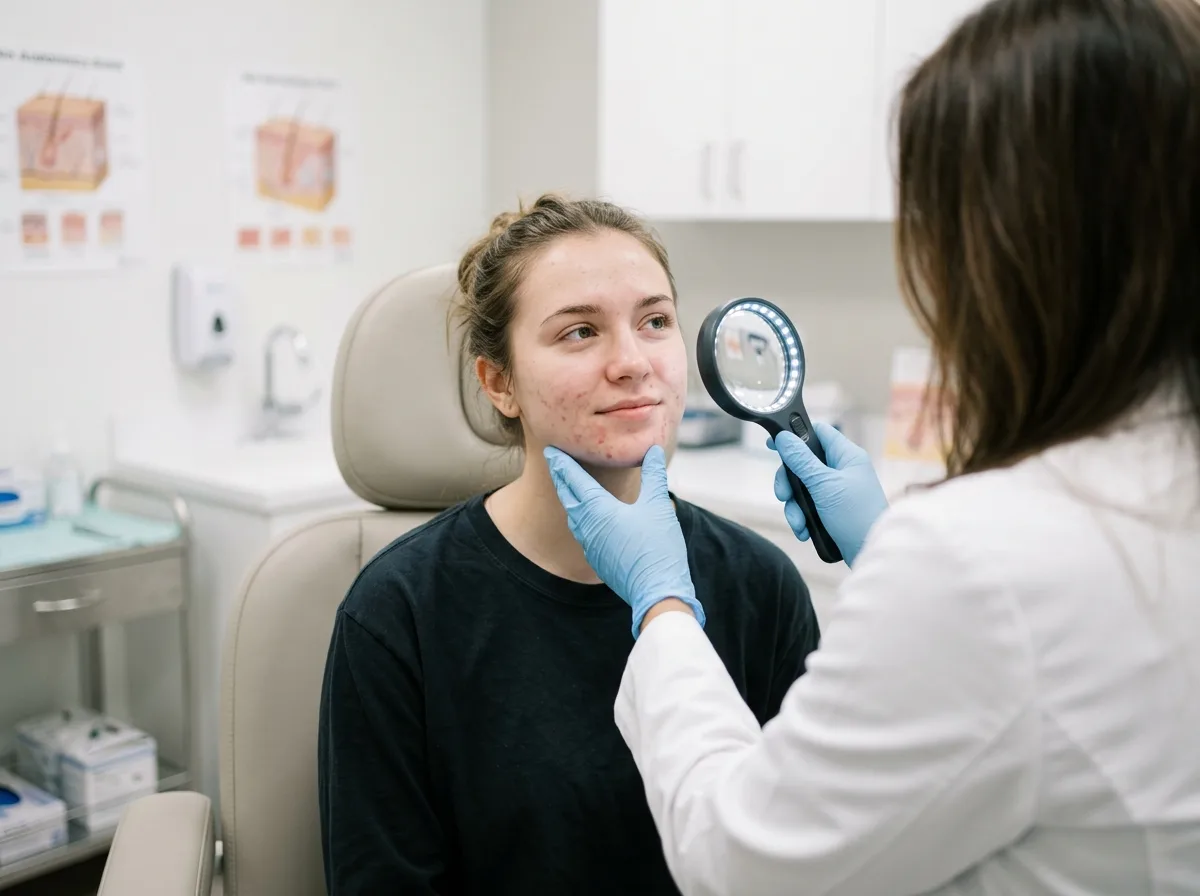
This is, hands down, the single most effective scar-prevention strategy — and the one I wish more people acted on sooner. I can’t tell you how many patients sit down in my clinic and open with “I probably should have come in months ago.” Every week that moderate or severe acne goes untreated is another week of active inflammation working away at your skin’s collagen. Please don’t wait it out. See a dermatologist as soon as breakouts become persistent, painful, or cystic, rather than cycling through drugstore products for months hoping the next one will be “the one.” Our own acne and scar treatment programme follows what we call a “Control first” protocol — medical facials, chemical peels, LED therapy, and prescription topical or oral treatment (including isotretinoin for severe cases) — because stabilising active acne is what actually prevents new scars while we work on any that are already there.
2. Never Pick, Pop, or Squeeze
I get it — when there’s a painful cyst staring back at you the night before an event, waiting feels unbearable. But manual extraction at home is one of the fastest ways to turn a mark into a permanent scar. Squeezing pushes bacteria and inflammatory material deeper into the surrounding tissue instead of out. If something genuinely needs extracting, let it be done by a professional with sterile technique. And if picking has become a hard habit to break — which happens more than people admit — treating the underlying urge (sometimes with a dermatologist’s or therapist’s help) works far better than relying on willpower alone.
3. Wear Broad-Spectrum Sunscreen Every Single Day
UV exposure is a major driver of post-inflammatory hyperpigmentation — it stimulates melanin production in exactly the areas your skin is already trying to repair, darkening and prolonging marks that might otherwise fade within months. A broad-spectrum SPF 30–50, reapplied if you’re outdoors for extended periods, is non-negotiable during any active acne or post-acne healing phase. Choose an oil-free, non-comedogenic formula so sunscreen itself doesn’t contribute to clogged pores.
4. Build a Gentle, Non-Irritating Skincare Routine
Inflamed skin is more vulnerable to scarring, so anything that adds irritation works against you. Use a mild, pH-balanced cleanser instead of harsh foaming scrubs, pat (don’t rub) skin dry, and moisturise even if your skin is oily — barrier damage triggers more inflammation, not less. Introduce actives like retinoids or acids gradually, one at a time, and stop or reduce frequency at the first sign of excessive redness, tightness, or peeling.
5. Use Ingredients With Real Evidence Behind Them
A handful of over-the-counter and prescription ingredients have genuine evidence for reducing acne severity, speeding mark fading, or supporting healthy collagen turnover — which indirectly lowers scar risk.
| Ingredient | What It Does | Best For |
|---|---|---|
| Topical retinoids | Normalises cell turnover, unclogs pores, supports collagen production | Preventing new lesions; mild texture support |
| Benzoyl peroxide | Kills acne-causing bacteria, reduces inflammation | Active inflammatory acne |
| Azelaic acid | Anti-inflammatory and mildly brightening | Sensitive or melanin-rich skin prone to dark marks |
| Niacinamide | Strengthens skin barrier, calms redness | All-purpose support during breakouts |
| Salicylic acid (BHA) | Exfoliates inside the pore lining | Blackheads and mild inflammatory acne |
| Broad-spectrum SPF | Prevents UV-triggered pigmentation | Every skin type, every day |
Introduce one new active at a time and give it 6–8 weeks before judging results. If your skin is reacting badly to several products at once, a dermatologist can simplify the routine to what is actually working.
6. Be Mindful of Diet and Lifestyle — With Realistic Expectations
Patients ask me about diet more than almost anything else, so let’s be honest about it: diet’s role in acne is real but modest, and its role in scarring is indirect — anything that reduces how often you flare reduces the cumulative inflammation behind scarring. Some studies link high-glycemic-index diets and, in certain individuals, dairy to increased acne activity, and chronic stress can worsen breakouts through hormonal pathways too. These are worth paying attention to as part of an overall plan. But please don’t delay professional care while you experiment with diet changes on your own — I’ve seen that trade-off cost people months of avoidable scarring.
7. Know Your Skin Type and Personal Risk Factors
Melanin-rich and Asian skin types are more prone to post-inflammatory hyperpigmentation than lighter skin tones, meaning marks can linger longer and appear more prominent even when the underlying acne was mild. If dark marks rather than pitted texture are your main concern, our pigmentation treatment guide covers targeted options. A family history of keloid or hypertrophic scarring is another risk factor worth mentioning to your dermatologist before any procedure, including simple extractions.
Acne Severity: When to Stop Waiting and See a Dermatologist
If there’s one regret I hear more than any other in consultations, it’s “I wish I’d come in sooner.” Use the table below as an honest gut-check on whether it’s time for a professional opinion rather than another few weeks of waiting.
| Acne Severity | What It Looks Like | Recommended Action |
|---|---|---|
| Mild | Occasional blackheads, whiteheads, a few small papules | Consistent over-the-counter routine; monitor for progression |
| Moderate | Regular papules and pustules, some inflammation, slow to clear | See a dermatologist for prescription topical or oral treatment |
| Severe / Cystic | Deep, painful nodules or cysts, frequent new lesions | Urgent dermatologist visit — highest scar risk without treatment |
| Any severity + scarring already visible | Pitting, dark marks, or raised scars present | Combined acne control and scar-revision consultation |
If you recognise moderate or severe acne in this table, don’t wait for it to “run its course.” Every month of delay is measurable in future scar severity. Explore our full acne and scar treatment programme or book a consultation to get an individualised plan.
Already Have Some Scarring? Here’s What to Do Next
If you’re reading this because some scarring has already shown up, take a breath — prevention was never all-or-nothing, and you still have real options. Following the steps above will stop things from getting worse, and existing scars are far more treatable than most people expect when they first sit down in my chair. Depressed scars respond to procedures like RF microneedling, subcision, and TCA CROSS, while dark marks fade with topical treatment, peels, and Pico laser. Our detailed guide on how to get rid of acne scars breaks down every scar type and which treatments match it, with realistic timelines so you know what to expect. Ongoing skin-quality maintenance with treatments such as skin quality programmes can also help scarred areas blend smoothly with the rest of your skin over time.
Quick Prevention Checklist
- Treat moderate-to-severe acne early — don’t wait it out.
- Never pick, pop, or squeeze breakouts.
- Apply broad-spectrum SPF 30–50 every day, rain or shine.
- Use a gentle cleanser and avoid harsh scrubs or over-exfoliation.
- Introduce evidence-based actives (retinoids, azelaic acid, niacinamide) gradually.
- Moderate high-glycemic and high-dairy intake if you notice a personal correlation with flares.
- See a dermatologist promptly for cystic, nodular, or persistent acne.
Frequently Asked Questions
Can acne scars be prevented completely?
Not with absolute certainty, but the large majority of scarring is preventable with early treatment of inflammatory acne, avoiding picking, and daily sun protection. Some individuals are genetically more prone to scarring regardless of care, which is why professional guidance matters for higher-risk skin.
Does drinking water or “detoxing” prevent acne scars?
No. Hydration supports overall skin health, but there is no evidence that water intake or detox diets prevent acne scarring. The proven levers are treating active inflammation, avoiding manipulation of lesions, and sun protection.
Is it too late to prevent scarring if I already have active acne?
No — prevention is ongoing, not a one-time window. Treating current breakouts quickly and correctly still reduces how much additional scarring forms, even if some marks are already present.
Do silicone gels or scar creams prevent acne scars?
Silicone-based gels have good evidence for improving raised (hypertrophic and keloid) scars, but limited effect on depressed acne scars, which make up most acne scarring. They are not a substitute for treating the acne that’s causing new lesions.
How soon should I see a dermatologist about acne?
As soon as breakouts become regular, painful, cystic, or aren’t improving after 6–8 weeks of consistent over-the-counter care. Earlier intervention consistently correlates with less scarring in clinical practice.
Protect Your Skin Before Scars Form
Preventing acne scars is far easier — and far less costly, in time and treatment — than reversing them later. If you’re dealing with active or recurring acne right now, the most valuable thing you can do is get a personalised assessment before more damage accumulates. I’d be glad to take a look. Book a consultation with me to build a prevention and treatment plan suited to your skin, or explore our complete acne and scar programme to learn more.
References & Further Reading
- American Academy of Dermatology Association — Acne Scars: Diagnosis and Treatment
- American Academy of Dermatology Association — Acne Skin Care Tips Dermatologists Recommend
- DermNet — Acne Scarring: Types and Management
- Cleveland Clinic — Acne Scars: Causes, Types & Treatment
- Fabbrocini G, et al. — Acne Scars: Pathogenesis, Classification and Treatment (Dermatology Research and Practice)
- National Institutes of Health / PubMed Central — Acne Scarring: Pathophysiology and Current Treatment Modalities (JCAD)