CO2 Laser Surgery
Precision Removal of
Skin Tags, Moles & Cysts
Ablative CO2 laser is the gold-standard tool for clean, scar-minimizing removal of benign skin lesions — including skin tags, moles, milia, cysts, cherry angiomas, sebaceous hyperplasia, and body warts. Performed by Dr. Pang under local anesthesia, often in a single session.
13+ Years
Dermatology Experience
What is CO2 Laser Surgery?
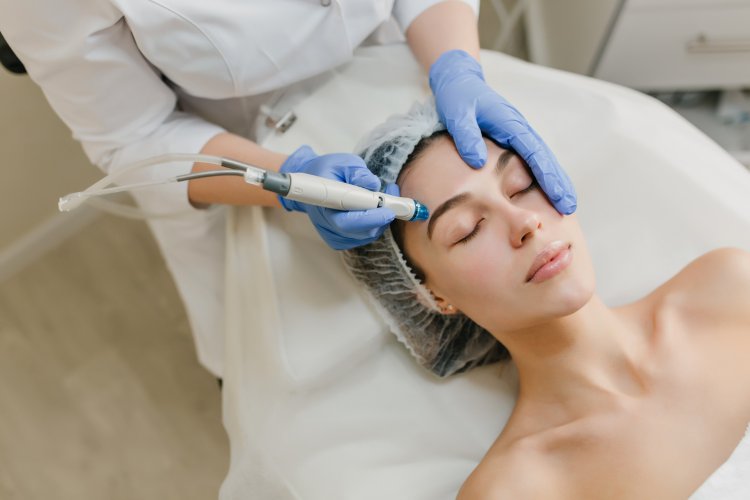
The CO2 (Carbon Dioxide) laser is a fully ablative surgical laser that vaporizes unwanted skin tissue layer by layer with extreme precision. Unlike a scalpel — which cuts through deeper structures and bleeds — the CO2 laser seals tiny blood vessels as it works, producing a clean, almost bloodless removal.
At Dr. Pang Skin Clinic we use CO2 laser specifically for the surgical removal of benign skin lesions — skin tags, moles, milia, cysts, cherry angiomas, sebaceous gland hyperplasia, and body warts.
The 10,600 nm wavelength is absorbed by water inside skin cells, instantly converting tissue to vapor. The laser's depth and width are controlled to the micron — so only the lesion is removed, while healthy surrounding skin stays intact. This is why CO2 laser surgery typically heals faster and scars less than traditional excision.
Wavelength absorbed by water in tissue
Precise vaporization — no stitches needed for most lesions
For most lesions, one visit is enough
Typical healing time
Skin Lesions Removed by CO2 Laser
Dr. Pang uses CO2 laser surgery to remove the following benign skin lesions cleanly and with minimal scarring. Every lesion is dermatologist-assessed first to confirm it is benign and suitable for laser removal.
Skin Tags (Acrochordon)
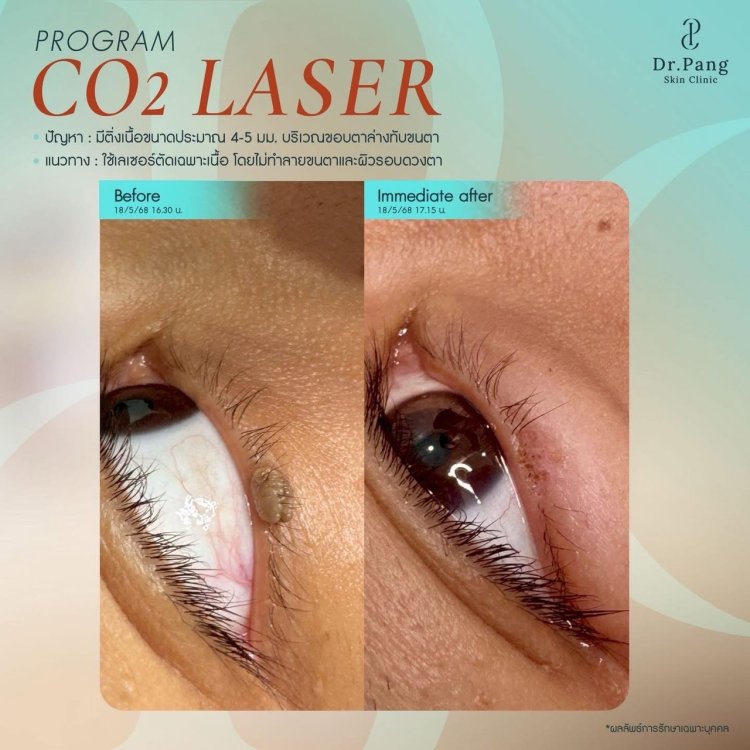
Soft, flesh-coloured outgrowths common on the neck, underarms, eyelids, and chest. CO2 laser removes them in seconds — usually multiple tags in a single visit, often with no stitches and barely visible marks afterwards.
Moles (Benign Nevi)
Raised or flat pigmented spots. Dr. Pang first examines every mole dermatoscopically to confirm it is benign before laser removal. Any mole with suspicious features is referred for surgical excision and pathology — never lasered.
Cysts (Epidermoid / Sebaceous)
Slow-growing lumps under the skin — common on the face, back, scalp, and behind the ears. CO2 laser allows Dr. Pang to make a small precise opening, drain the contents, and remove the entire cyst wall — the only way to prevent recurrence.
Milia (Milk Spots)
Tiny, hard white bumps trapped under the skin — most often around the eyes and cheeks. They cannot be squeezed out like blackheads. CO2 laser opens each milium precisely so its keratin core can lift out without trauma to surrounding skin.
Sebaceous Gland Hyperplasia
Small, yellowish, doughnut-shaped bumps usually on the forehead and cheeks of adults. They are enlarged oil glands — completely benign but cosmetically frustrating. CO2 laser flattens each bump in seconds without damaging the surrounding skin.
Cherry Angiomas
Small, bright red spots — clusters of tiny dilated blood vessels just under the skin. Common on the trunk and arms in adults. CO2 laser vaporizes them cleanly. Multiple cherry angiomas can be removed in one session.
Body Warts (Viral)
CO2 laser vaporizes warts on the body, face, neck, and trunk — including flat warts and filiform warts. The high heat also helps sterilize the area, reducing recurrence.
How Ablative CO2 Laser Works
A four-step process — fast, precise, and dramatically less traumatic than traditional excision for most benign lesions.
Targeted Energy Delivery
Dr. Pang directs the laser beam precisely onto the lesion. The 10,600 nm wavelength is absorbed only by water in tissue — so the beam stops where the lesion stops.
Instant Tissue Vaporization
Inside the lesion, water flash-boils and the unwanted tissue is converted directly to vapor. Layer by layer, the lesion is removed without dragging or cutting nearby healthy skin.
Built-In Hemostasis
The same heat that vaporizes tissue seals tiny blood vessels and lymphatics — meaning bleeding is minimal and the field stays clean, so Dr. Pang can see the base of the lesion clearly.
Clean, Open Healing
A small crust forms over the treated area, protecting it as new skin regenerates underneath. Most patients heal within 7-14 days, with a final result that is significantly less visible than a stitched scar.
Why Doctors Prefer CO2 Laser
Sub-mm Precision
Removes the lesion — not healthy skin
Near-Bloodless
Seals vessels as it cuts
Often No Stitches
Most lesions heal open
Minimal Scarring
Better than scalpel for most lesions
CO2 Laser vs. Other Removal Methods
How ablative CO2 laser compares to traditional approaches for skin lesion removal
| Feature | CO2 Laser | Scalpel Excision | Cryotherapy |
|---|---|---|---|
| Precision | Sub-millimetre | Depends on hand | Diffuse freeze |
| Bleeding | Minimal | Moderate | None |
| Stitches | Usually none | Almost always | None |
| Risk of Recurrence | Low | Low | Higher |
| Scar Outcome | Often barely visible | Linear scar | Possible white spot |
For suspicious lesions, surgical excision with pathology is the correct choice — never CO2 laser alone.
What Happens on the Day of Treatment
Most CO2 laser removals are walk-in, walk-out — typically 15-45 minutes from start to finish, depending on how many lesions are treated.
Dermatologist Assessment
Dr. Pang examines every lesion — visually and (if needed) with a dermatoscope — to confirm it is benign and a good candidate for CO2 laser. Suspicious lesions are referred for surgical excision and pathology.
Numbing
Topical anesthetic cream is applied for 20-30 minutes. For deeper or larger lesions (e.g. cysts), a small local anesthetic injection is added — making the procedure essentially pain-free.
Laser Removal
Dr. Pang vaporizes the lesion layer by layer until it is fully removed and the base looks clean. You may notice a faint burning smell — that is normal vaporized tissue. The treatment itself takes seconds to a few minutes per lesion.
Immediate Aftercare
A protective antibiotic ointment and a small dressing are applied. You'll receive written instructions: keep the area clean, apply ointment 2-3× daily, no swimming pools, no makeup over the wound for the first week, and strict SPF 50+ once it heals.
Healing & Follow-Up
A thin crust forms over 24-48 hours and falls off naturally in 7-14 days. New pink skin underneath gradually returns to your normal skin tone over 4-12 weeks. Dr. Pang sees you for follow-up if needed and offers scar-minimizing aftercare guidance throughout.
Performed by Dr. Pang
Board-Certified Dermatologist
What to Expect
45-60 minutes (incl. numbing)
1 session for most lesions
7-14 days crust phase
Skin tone normalizes over 4-12 weeks
Pro Tip: SPF 50+ on the healed area every day for 3 months is the single biggest factor in preventing post-laser dark marks.

Why Choose Dr. Pang for CO2 Laser Removal?
CO2 laser surgery looks simple from the outside — point and remove. In reality, the difference between a clean, scar-free result and a permanent mark comes down to dermatology training, the right depth setting, and knowing when not to laser.
Board-Certified Dermatologist
Certified by Thailand Medical Council with dermatologic surgery credentials
Dermatoscopic Pre-Assessment
Every lesion is checked under magnification before laser — never assumed benign
Asian-Skin-Safe Settings
Conservative laser parameters tuned for Fitzpatrick III-V to minimize PIH risk
Honest Scope & No Hard Selling
If CO2 laser isn't the right tool for your lesion, we tell you — and refer appropriately
Clean, Scar-Minimizing Results
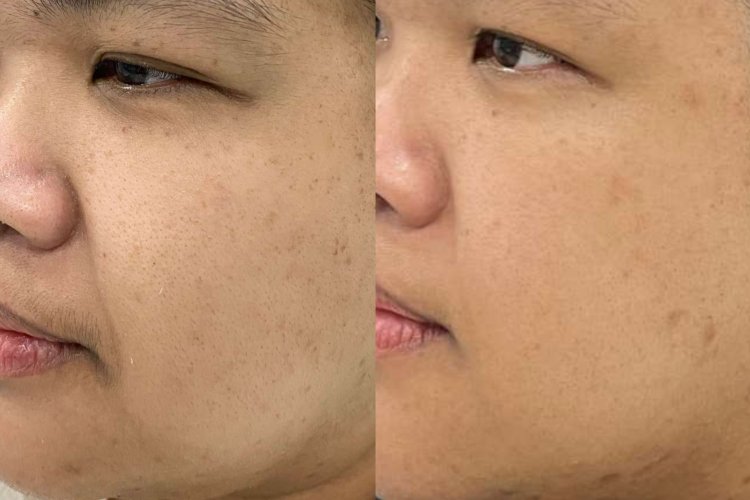
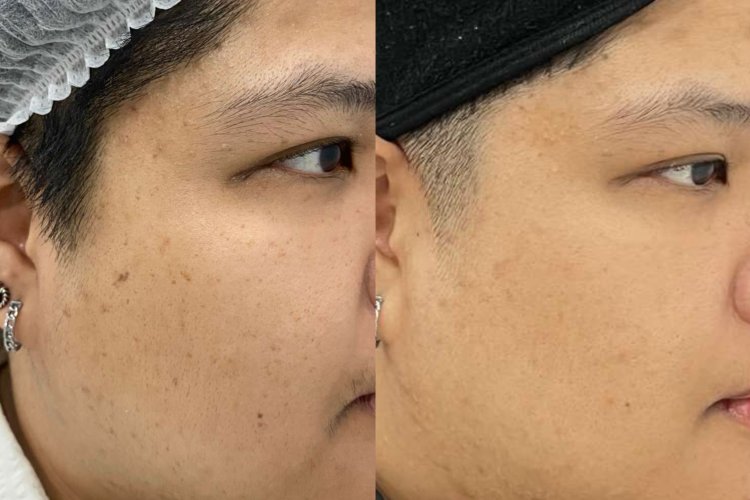
Actual outcomes from CO2 laser lesion removals performed by Dr. Pang at our Bangkok clinic.

Skin Tag Removal
Single session · Neck area
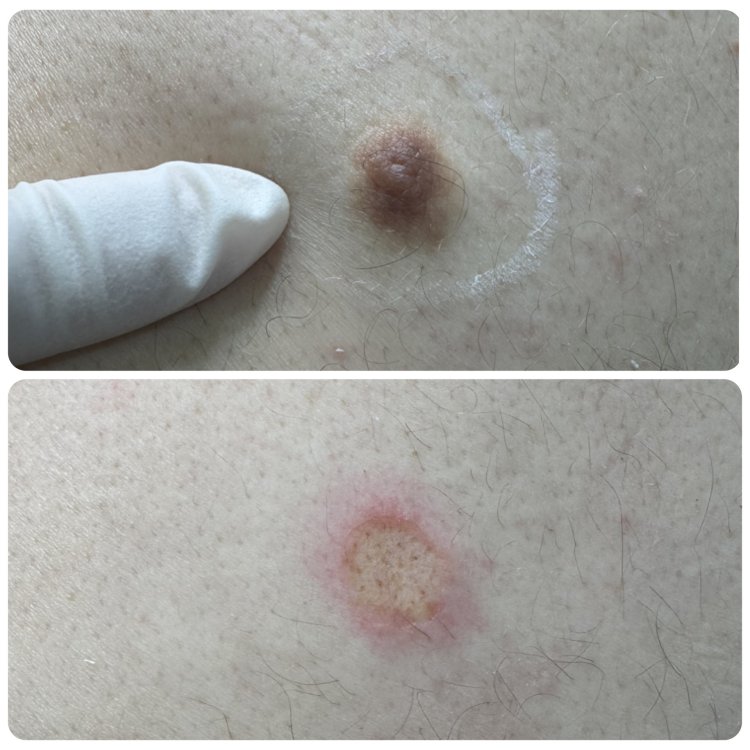
Mole Removal
Benign nevus · Facial
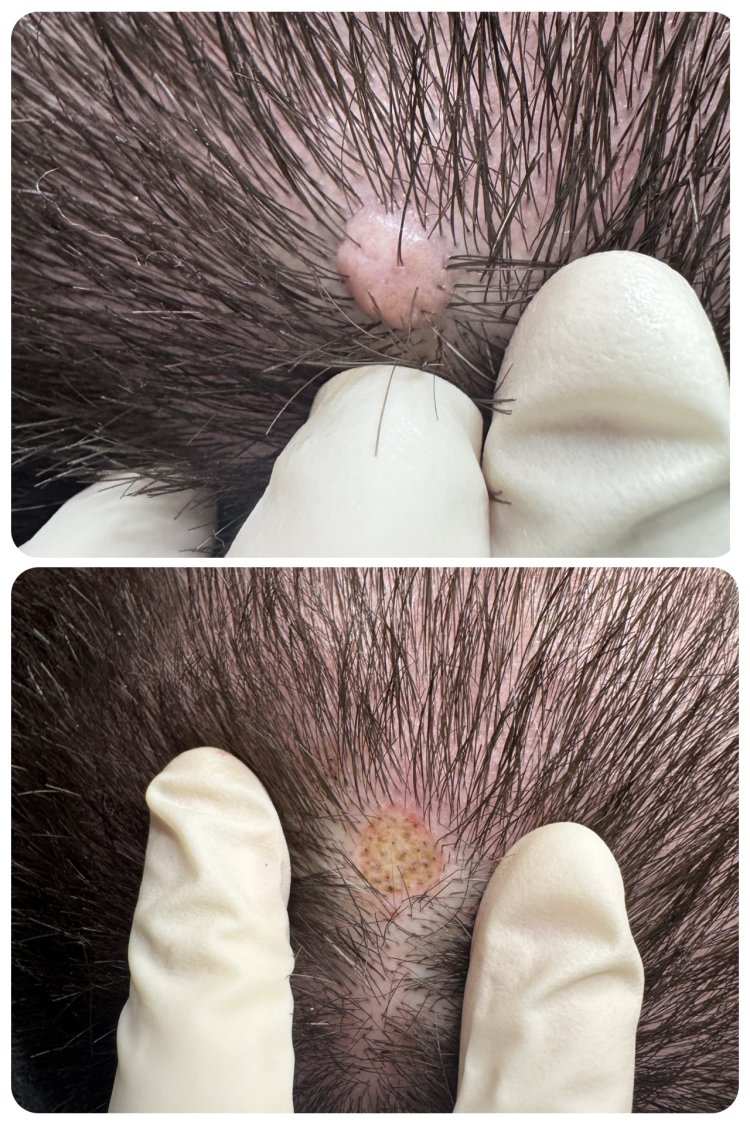
Cyst Removal
Epidermoid cyst · Forehead
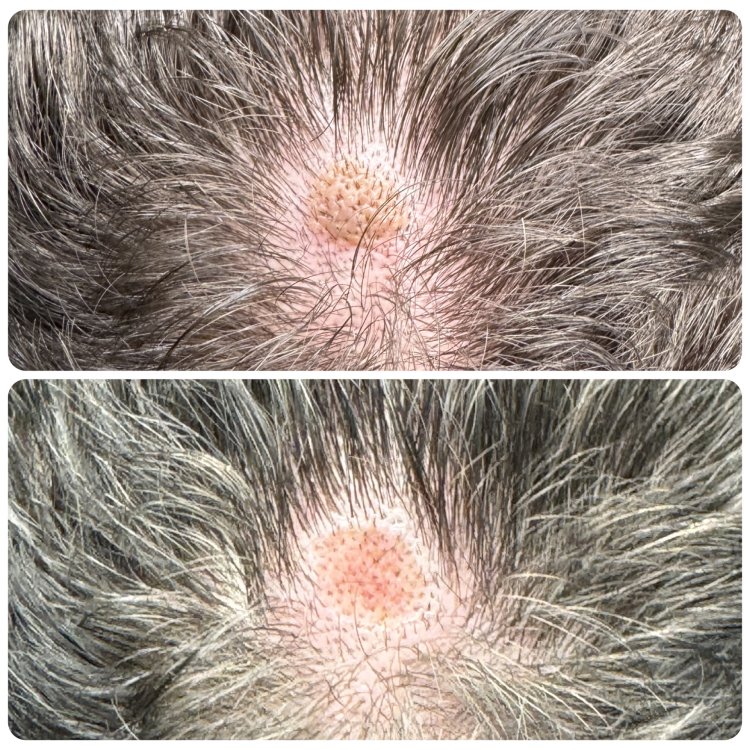
Milia Removal
Under-eye milia cluster
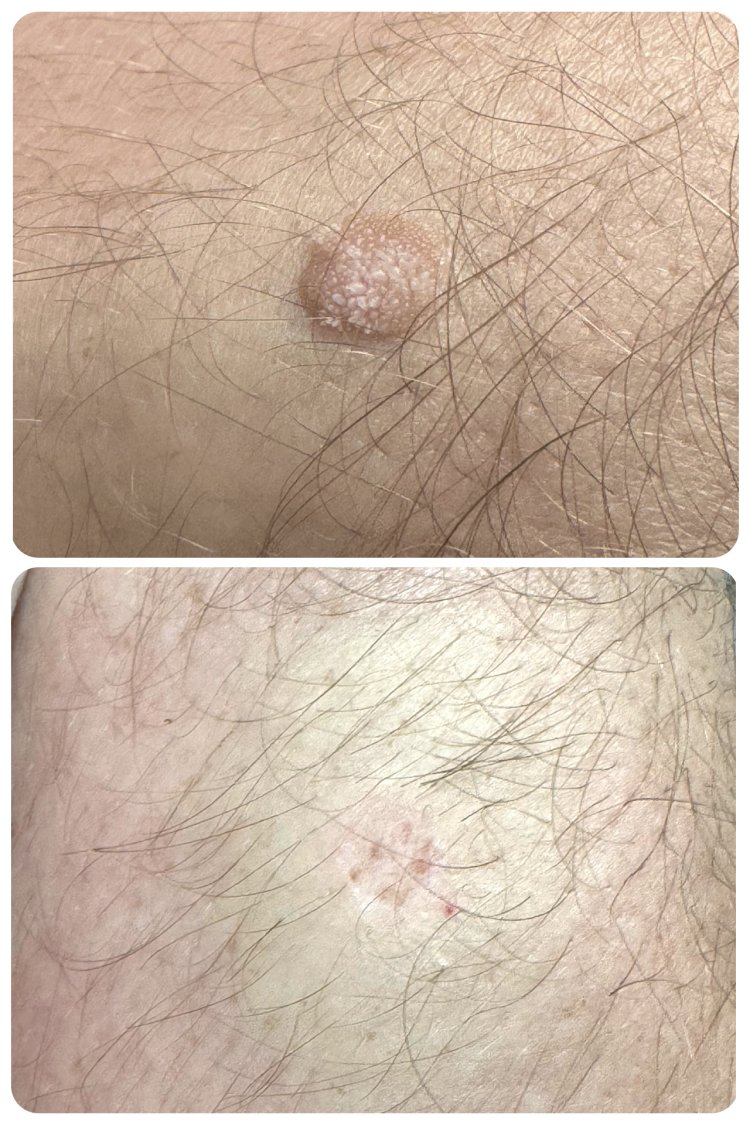
Sebaceous Hyperplasia
Multiple lesions · Forehead

Cherry Angiomas
Multiple lesions · Trunk
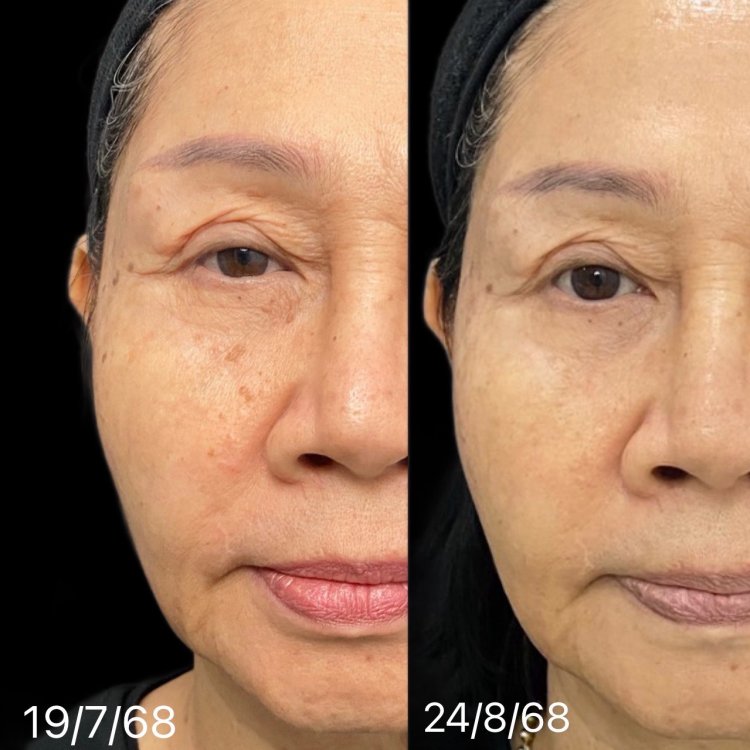
Body Wart Removal
Trunk · Single session
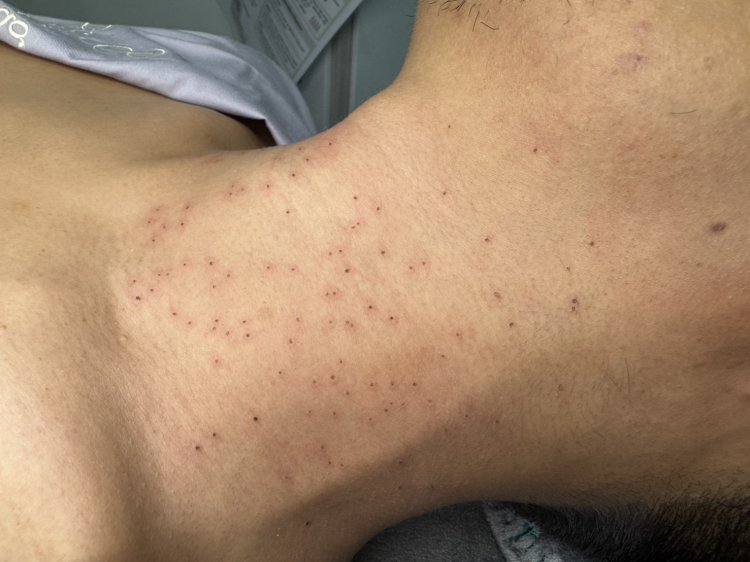
Multiple Lesions
Combined removal · One visit
Lesions Removed
Patient Satisfaction
Session for Most Lesions
Years Experience
Individual results vary depending on lesion type, size, location, and aftercare adherence.
Frequently Asked Questions
Any time skin is broken, some mark is possible — but ablative CO2 laser is one of the lowest-scar options available for small benign lesions. Most patients are left with a tiny, flat mark that fades to nearly invisible over 4-12 weeks. Outcome depends on lesion size, location, your skin type, and — most importantly — sun protection during healing. We send every patient home with a written aftercare plan to optimize the result.
Almost never. Small lesions like skin tags or milia are managed with topical numbing cream alone — patients usually feel pressure, not pain. Larger or deeper lesions like cysts are numbed with a small local anesthetic injection beforehand, so the procedure itself is essentially pain-free. Mild stinging or warmth for 1-2 days afterwards is normal and easily managed.
A small crust forms within 24-48 hours and falls off naturally in 7-14 days. New pink skin underneath gradually returns to your natural skin tone over 4-12 weeks. You can return to work the next day for most lesions; cysts on visible areas may benefit from 1-2 days at home. Avoid swimming, saunas, and direct sun on the treated area until fully healed.
Yes — this is one of CO2 laser's biggest practical advantages. Dr. Pang routinely removes 20-150+ skin tags, dozens of milia, or several cherry angiomas in a single visit. Larger procedures (e.g. cyst plus other lesions) are also commonly bundled. Pricing is structured per lesion type so combining is cost-effective.
Yes — when performed correctly. Asian skin (Fitzpatrick III-V) is more prone to post-inflammatory hyperpigmentation (PIH) after any wound healing. Dr. Pang uses conservative laser settings and a strict post-treatment protocol (gentle skincare + daily SPF 50+) specifically tuned for Asian skin to minimize this risk.
Days 1-7: Apply the antibiotic ointment we provide 2-3× daily. Keep the area dry — no swimming, saunas, or hot showers directly on it. Do not pick the crust; let it fall off naturally.
Weeks 2-12: Once the crust falls off, switch to gentle moisturizer and SPF 50+ every single day — even indoors near windows. This is the single most important step in preventing dark marks. Avoid active ingredients (retinol, AHA/BHA) on the area for 4-6 weeks.
Ready to Remove Those Bumps and Spots?
Book a dermatology consultation with Dr. Pang. We'll check every lesion, tell you honestly whether CO2 laser is the right tool, and — if it is — most patients are done in the same visit.