
Non-surgical face lifting has come a long way from the radiofrequency machines and ultrasound devices that defined the last decade. The newest generation of energy-based treatments operate beneath the skin rather than across it — and the most clinically discussed of these is Endolift X, a 1470 nm diode laser delivered through a hair-thin optical fiber. The result is a procedure that lifts, tightens, and reduces localised fat in a single 30–60 minute session, with no surgery, no general anaesthesia, and recovery measured in days rather than months.
This deep-dive article explains how Endolift X works at a tissue level, what the published evidence shows, who it is — and isn’t — for, how it compares to HIFU and Thermage, and what to realistically expect during recovery. It is written from the perspective of Dr. Pang Skin Clinic, the EndoliftX Clinic of the Year 2025 and one of the first practices in Thailand to introduce the technology.
What Is Endolift X?
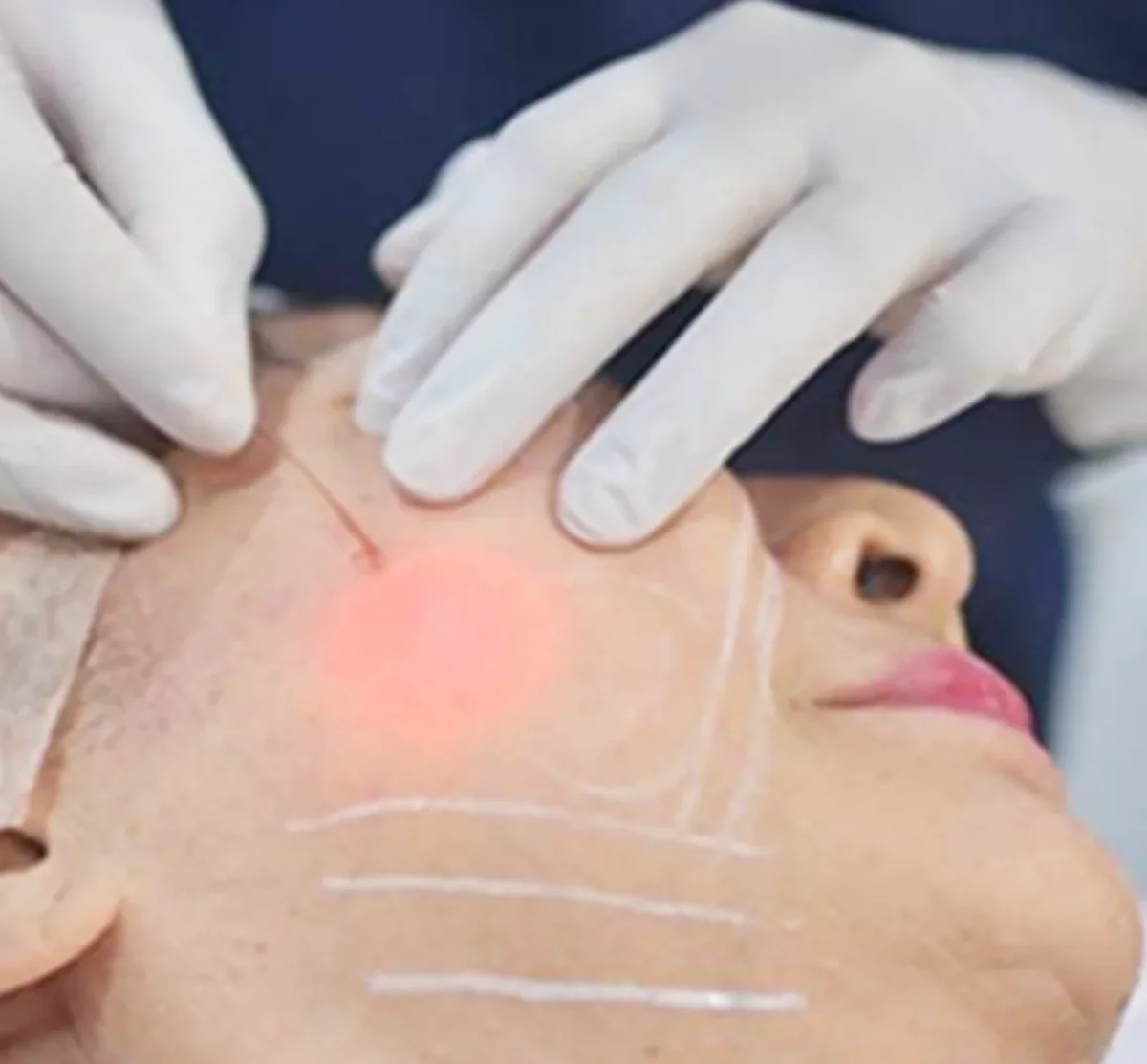
Endolift X is a minimally invasive laser-based procedure that uses a 1470 nm diode laser delivered intra-dermally through a single-use optical fiber roughly 0.3 mm in diameter — about the thickness of a human hair. The fiber is inserted just beneath the skin via a small entry point and gently moved through the subdermal layer, depositing controlled thermal energy along its path.
The 1470 nm wavelength is specifically absorbed by water and lipid tissue, which produces three simultaneous effects:
- Subcision and immediate retraction of fibrous bands, lifting the tissue.
- Selective lipolysis — small pockets of localised fat are gently liquefied and naturally cleared by the body.
- Long-term collagen and elastin neogenesis driven by the controlled subdermal heating.
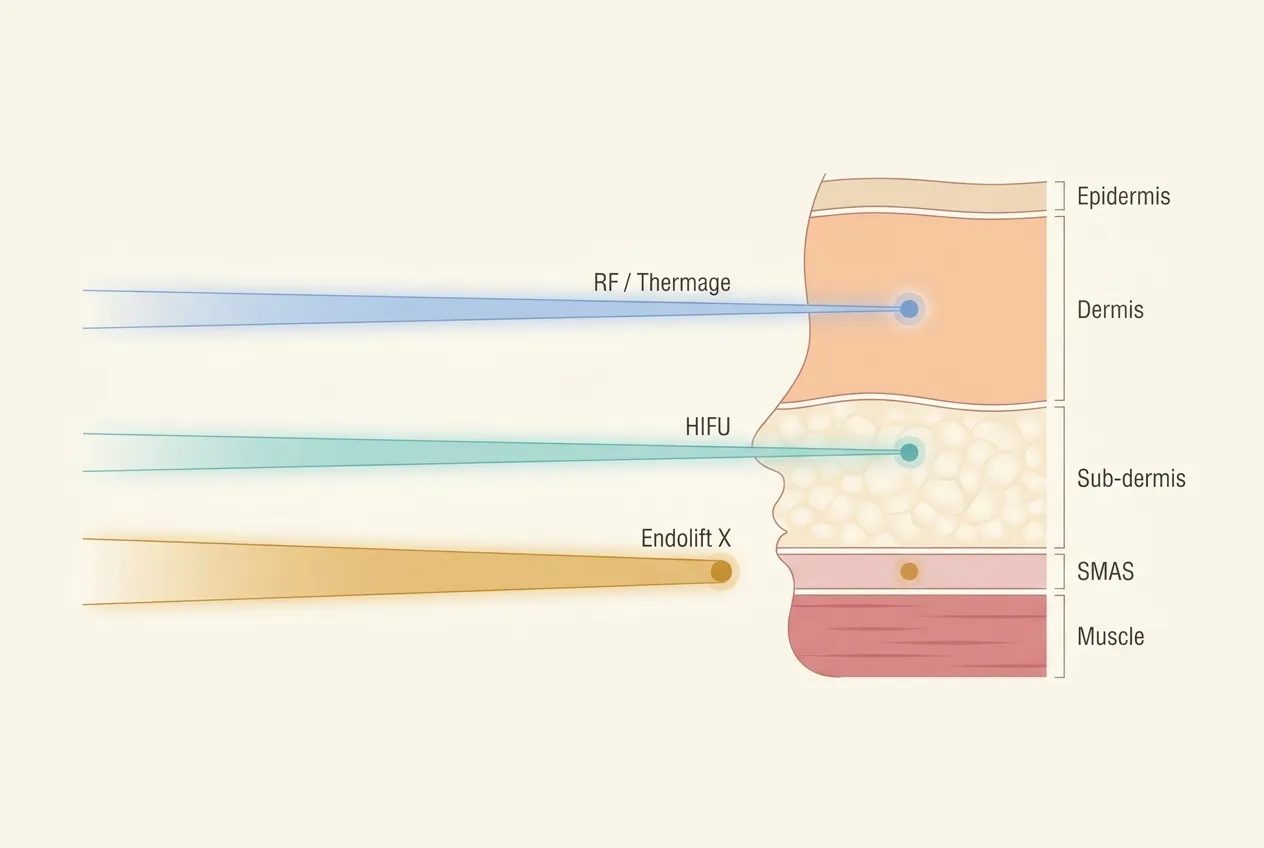
Because the energy is delivered inside the tissue, the surface of the skin remains relatively cool. That is the key conceptual difference between Endolift X and conventional energy-based lifting devices, which deliver heat from above and rely on it travelling inward.
For a full procedural overview, see the Endolift X treatment page.
The Science: Why 1470 nm Matters
Different laser wavelengths interact with different tissue components. The 1470 nm diode wavelength was selected for endolifting because it sits at a peak of dual absorption by water and adipose tissue, making it efficient for both fat dissolution and collagen-stimulating thermal effects, while remaining safe for surrounding structures.
A 2023 pilot study published in the International Journal of Medical Science and Clinical Invention reported significant submental fat reduction and skin tightening after a single endolifting session at 4–8 W using a 400-micron fiber, with no adverse events on follow-up. A 2024 review in PubMed confirmed that intralesional 1470 nm diode laser therapy provides measurable improvements in cutaneous elasticity and wrinkle severity that remained prominent at 12 months.
Endolift X vs Other Non-Surgical Lifting Treatments
Patients usually arrive at the consultation having already heard of HIFU, Thermage, and PDO threads. Each technology has its place — they treat different tissue layers and different problems:
| Feature | Endolift X | HIFU (Ultraformer / Ultherapy) | Thermage / RF | PDO Threads |
|---|---|---|---|---|
| Energy source | 1470 nm diode laser, intra-dermal fiber | Focused ultrasound, transdermal | Monopolar radiofrequency, transdermal | Mechanical thread + bio-absorbable PDO |
| Tissue layer treated | Sub-dermis & subcutaneous fat | SMAS / 4.5 mm depth | Mid-dermis | Sub-dermis (mechanical) |
| Fat reduction? | Yes | Limited | No | No |
| Recovery | 1–3 days | 0–1 day | 0–1 day | 5–10 days |
| Result duration | 2–5 years | 12–18 months | 9–12 months | 6–12 months |
| Best candidate | Moderate laxity + localised fat | Mild–moderate laxity, no fat issue | Surface laxity, mild crepey skin | Patients wanting immediate lift |
The headline distinction: Endolift X is the only treatment in this group that simultaneously addresses fat reduction and structural tightening in a single session, which is why it has become particularly popular for the lower face, jawline, and double chin. Patients with surface-only laxity may still do better with HIFU or RF; patients with significant skin descent that crosses the SMAS plane may still need surgery.
Treatment Areas — Face and Body
Although Endolift X is best known for jawline and double-chin contouring, the technology is approved for use across multiple regions where mild-to-moderate skin laxity coexists with localised fat:
- Face: jawline definition, jowl reduction, mid-face lift, nasolabial fold improvement, peri-oral tightening.
- Neck and submentum: double chin reduction, neck banding, “turkey neck” laxity.
- Abdomen: post-pregnancy laxity, mild localised fat after weight loss.
- Inner thighs and knees: stubborn fat with skin crepeyness that does not respond to exercise.
- Upper arms (“bingo wings”): a non-surgical alternative to brachioplasty for early-to-moderate cases.
- Hips, buttocks, and flanks: contour refinement after weight changes.
Treatment area selection is highly individualised — see our Lifting and Tightening overview for how Endolift X fits within a broader rejuvenation plan.
What Happens During an Endolift X Session
A typical face-and-jawline appointment runs approximately 45–60 minutes. Here is the step-by-step procedure:
- Pre-treatment imaging and consent. The skin is photographed and treatment zones are mapped with a surgical pen.
- Local anaesthesia. A small amount of tumescent local anaesthetic is infiltrated into each treatment zone — no general anaesthesia, no sedation.
- Fiber insertion. A tiny entry point (less than 1 mm) is created. The single-use 0.3 mm optical fiber is gently advanced into the subdermal layer.
- Laser delivery. The laser is activated as the fiber is moved in fluid passes. Energy is delivered evenly along the entire path.
- Closure. No stitches are required. The entry point is covered with a small surgical strip.
- Cooling and aftercare briefing. Cold compresses are applied. The patient is given written aftercare instructions and goes home the same day.
Recovery Timeline
Recovery is one of the most attractive aspects of Endolift X for working professionals. The vast majority of patients return to a desk-based routine within 1–3 days. Below is a realistic milestone timeline based on internal patient records:
| Time after treatment | What you should expect |
|---|---|
| First 24 hours | Mild swelling, slight redness, pin-point sensation at entry sites |
| Day 2–3 | Swelling subsides; skin already feels firmer to the touch |
| Week 1 | Bruising (if any) fades; visible smoothing of treated area begins |
| Month 1 | Defined contour change visible — collagen remodeling actively underway |
| Month 3 | Optimal result. Tighter, smoother, more elastic skin with reduced localised fat |
| 2–5 years | Effects sustained, gradually softening over time |
Aftercare Essentials
- Avoid hot water, sauna, and intense exercise for 48–72 hours.
- Apply gentle, fragrance-free moisturiser only — skip retinol, AHA/BHA, and exfoliants for 7–10 days.
- Use broad-spectrum SPF 50+ daily; treated skin is photosensitive for 4 weeks.
- Stay well hydrated — at least 2 litres of water per day for the first week.
- Sleep slightly elevated for 2 nights to minimise swelling.
Who Is — and Isn’t — a Good Candidate?
Ideal Candidates
- Adults aged 30–65 with mild-to-moderate skin laxity
- Localised fat in the chin, jawline, abdomen, thighs, or arms that resists diet and exercise
- People wanting a meaningful lift without surgery, anaesthesia, or weeks of downtime
- Patients who have plateaued on HIFU or RF and want deeper, longer-lasting tightening
Not Ideal — Or Outright Contraindicated
- Severe skin descent that has crossed the SMAS plane (these patients usually need surgical lifting)
- Pregnancy or breastfeeding
- Active skin infection, dermatitis, or recent isotretinoin use within 6 months
- Bleeding disorders or anti-coagulant therapy that cannot be safely paused
- Unrealistic expectations — Endolift X does not replicate a surgical facelift on patients with severe sagging
Safety, Regulation, and What to Look For
Endolift X is approved by the U.S. FDA, CE (European Union), and Thailand FDA (อย.) for non-surgical skin tightening and fat reduction. The 1470 nm wavelength has a strong safety profile in the published literature when used by trained clinicians.
Before choosing a clinic, verify these four things:
- The treating physician is a licensed dermatologist or plastic surgeon with documented Endolift X training.
- The device is the genuine Endolift X (Eufoton) system — not a generic 1470 nm diode.
- Single-use sterile fibers are unsealed in front of you.
- The clinic provides clear written aftercare instructions and a follow-up appointment at 4 weeks.
Frequently Asked Questions
Does Endolift X hurt?
Most patients describe the sensation as a warm, gliding pressure under the skin after the local anaesthetic is administered. Pain is generally rated 2–3/10 — significantly more comfortable than threads or surgery.
How many sessions do I need?
One session is enough for most patients. Some areas with thicker fat (abdomen, thighs) may benefit from a second session 6 months later, but this is decided after reviewing 3-month results.
Will there be visible scars?
The entry points are smaller than a needle prick and typically heal completely within 7–14 days, leaving no visible mark. We hide entry points within natural skin folds wherever possible.
Can Endolift X be combined with other treatments?
Yes — Endolift X pairs well with biostimulators (after 4 weeks) and HA fillers (after 2 weeks) for full-face rejuvenation. We commonly recommend Endolift X for the structural lift and fat reduction component, with biostimulator added later for skin quality across the broader face. See our biostimulator overview for how the two work together.
How long do the results last?
Independent published case series report sustained improvement at 12 months, with clinical experience showing meaningful results lasting 2–5 years. Maintenance is typically once every 3–4 years if desired.
How much does Endolift X cost in Bangkok?
Pricing varies by area treated. A double-chin or jawline session typically starts around ฿45,000–80,000; full-face protocols range from ฿120,000 upward. The most accurate quote comes from an in-person assessment because energy required differs by skin thickness and fat volume.
Why Patients Choose Dr. Pang for Endolift X
Dr. Pang was one of the first dermatologists in Thailand to introduce Endolift X technology, and the clinic was honoured as EndoliftX Clinic of the Year 2025 at the GlobalHealth Aesthetics & Wellness Summit in Singapore, with Dr. Pang personally receiving the EndoliftX Expert Award the same year. Dr. Pang completed advanced body-contouring training in Italy under the original Eufoton clinical team.
Every Endolift X procedure at the clinic is performed personally by Dr. Pang, a board-certified dermatologist, in a full medical-grade facility. Each treatment plan is mapped to your facial anatomy, fat distribution, and goals — not to a fixed protocol.
References & Further Reading
- Dias N, Almeida J, et al. 1470 nm Diode Laser Effectiveness in Facial Fat Reduction with the Endolifting Technique: Pilot Study. International Journal of Medical Science and Clinical Invention; 2023. valleyinternational.net
- Cuomo R, Russo F, et al. The Endo-lift Laser (Intralesional 1470 nm Diode Laser): A Systematic Review. PubMed. pubmed.ncbi.nlm.nih.gov/38886198
- MedCrave Online. Submentonial Fat Reduction with 1470 nm Diode Laser and Endolifting Technique: Case Report. medcraveonline.com
- OPAST Publishers. New Protocol: EndoliftX Laser and Hyaluronic Acid / Calcium Hydroxyapatite as an Effective Approach for Facial Rejuvenation. Journal of Cosmetic and Laser Therapy. opastpublishers.com
- U.S. Food & Drug Administration. 510(k) Premarket Notifications — 1470 nm Diode Laser Surgical Devices. fda.gov/medical-devices
This article was prepared by the medical team at Dr. Pang Skin Clinic, Bangkok, and reflects current clinical practice as of 2026. It is intended for educational purposes and does not replace an in-person consultation. Energy-based procedures should only be performed by a licensed, board-certified physician.