
นี่คือคำตอบที่ตรงไปตรงมาและได้รับการรับรองจากแพทย์เฉพาะทางผิวหนังแล้ว สำหรับคำถามที่ว่า วิธีรักษารอยแผลเป็นจากสิวทำอย่างไรรอยแผลเป็นแบบบุ๋ม (รอยแผลเป็นฝ่อ) ไม่สามารถลบออกได้ด้วยครีมเพียงอย่างเดียว แต่การรักษาที่ถูกต้องในคลินิกสามารถช่วยให้รอยแผลเป็นดีขึ้นได้ 50-70% บางครั้งอาจดีกว่านั้นหากใช้การรักษาแบบผสมผสาน รอยดำเรียบๆ ที่เหลือจากสิว (รอยดำหลังการอักเสบ) สามารถจางลงได้ด้วยครีมและเลเซอร์ แต่รอยแผลเป็นแบบบุ๋มจำเป็นต้องอาศัยหัตถการที่ช่วยฟื้นฟูการสร้างคอลลาเจนใหม่ หรือการตัดเลาะพังผืดใต้ผิวหนัง
คู่มือนี้อธิบายถึงรอยแผลเป็นแต่ละประเภท วิธีการรักษาที่ได้ผล ระยะเวลาที่เหมาะสม และวิธีการป้องกันการเกิดรอยแผลเป็นใหม่ เขียนโดย คุณหมอแป้ง แพทย์เฉพาะทางผิวหนังและหัตถการทางผิวหนัง เลเซอร์ ที่ได้รับการรับรองจากแพทยสภา ผู้เชี่ยวชาญด้านการรักษาสิวและรอยแผลเป็นบนผิวชาวเอเชียทุกวัน สำหรับรายละเอียดการรักษาทั้งหมด โปรดดูที่เว็บไซต์ของเรา หน้าการรักษาสิวและรอยแผลเป็น.
รอยแผลเป็นจากสิวสามารถกำจัดได้จริงหรือไม่? (คำตอบโดยย่อ)
ใช่ค่ะ — แต่คำว่า “แผลเป็น” ครอบคลุมปัญหาหลายอย่าง และแต่ละอย่างต้องการการรักษาที่แตกต่างกัน การเลือกวิธีการรักษาให้เหมาะสมกับแผลเป็นเป็นปัจจัยสำคัญที่สุดที่จะส่งผลต่อผลลัพธ์ นี่คือคำอธิบายแบบย่อ:
- รอยดำ (รอยดำหลังการอักเสบ/รอยแดงหลังการอักเสบ): จุดสีน้ำตาลหรือแดงเรียบๆ ไม่ใช่ รอยแผลเป็นที่แท้จริง จะจางลงภายในไม่กี่เดือนและตอบสนองได้ดีต่อครีมกันแดด ครีมที่แพทย์สั่ง การผลัดเซลล์ผิวด้วยสารเคมี และเลเซอร์กำจัดเม็ดสี
- แผลเป็นแบบยุบตัว (ฝ่อ): รอยแผลเป็นแบบหลุมลึก รอยแผลเป็นแบบขอบชัด และรอยแผลเป็นแบบแอ่งกระทะ จะไม่หายไปเอง จำเป็นต้องรักษาด้วยวิธีการกระตุ้นการสร้างคอลลาเจนหรือสลายเนื้อเยื่อแผลเป็น เช่น การใช้เข็มขนาดเล็กเจาะผิวหนังด้วยคลื่นวิทยุ (RF microneedling), การผ่าตัดใต้ผิวหนัง (subcision) และ TCA CROSS
- แผลเป็นนูน (แผลเป็นคีลอยด์): พบได้น้อยบนใบหน้า โดยปกติแล้วต้องฉีดสเตียรอยด์เข้าไปในแผลเป็น
- ความคาดหวังที่เป็นจริง: เป้าหมายคือการปรับปรุงที่ดีขึ้นอย่างมาก ไม่ใช่ความสมบูรณ์แบบ คนไข้ส่วนใหญ่เห็นการปรับปรุง 50–70% บางครั้งอาจมากกว่านั้นหากใช้การรักษาแบบผสมผสาน
อันดับแรก รู้จักประเภทของรอยแผลเป็นจากสิวของคุณ
การรู้จักประเภทของรอยแผลเป็นของคุณคือขั้นตอนแรกของการรักษาที่มีประสิทธิภาพ การใช้ "วิธีการรักษารอยแผลเป็น" เพียงวิธีเดียวสำหรับรอยแผลเป็นทุกประเภทคือสาเหตุที่ทำให้หลายคนผิดหวังกับผลลัพธ์ คนส่วนใหญ่มีรอยแผลเป็นหลายประเภท ผสมกัน รอยแผลเป็นจากสิวที่มีลักษณะเป็นหลุมลึกมีหลายประเภท เป็นเหตุผลว่าทำไมแผนการรักษาเฉพาะบุคคลจึงได้ผลดีที่สุด รอยแผลเป็นจากสิวแบบหลุมลึกหลักๆ มีสามประเภทดังแสดงไว้ด้านล่าง
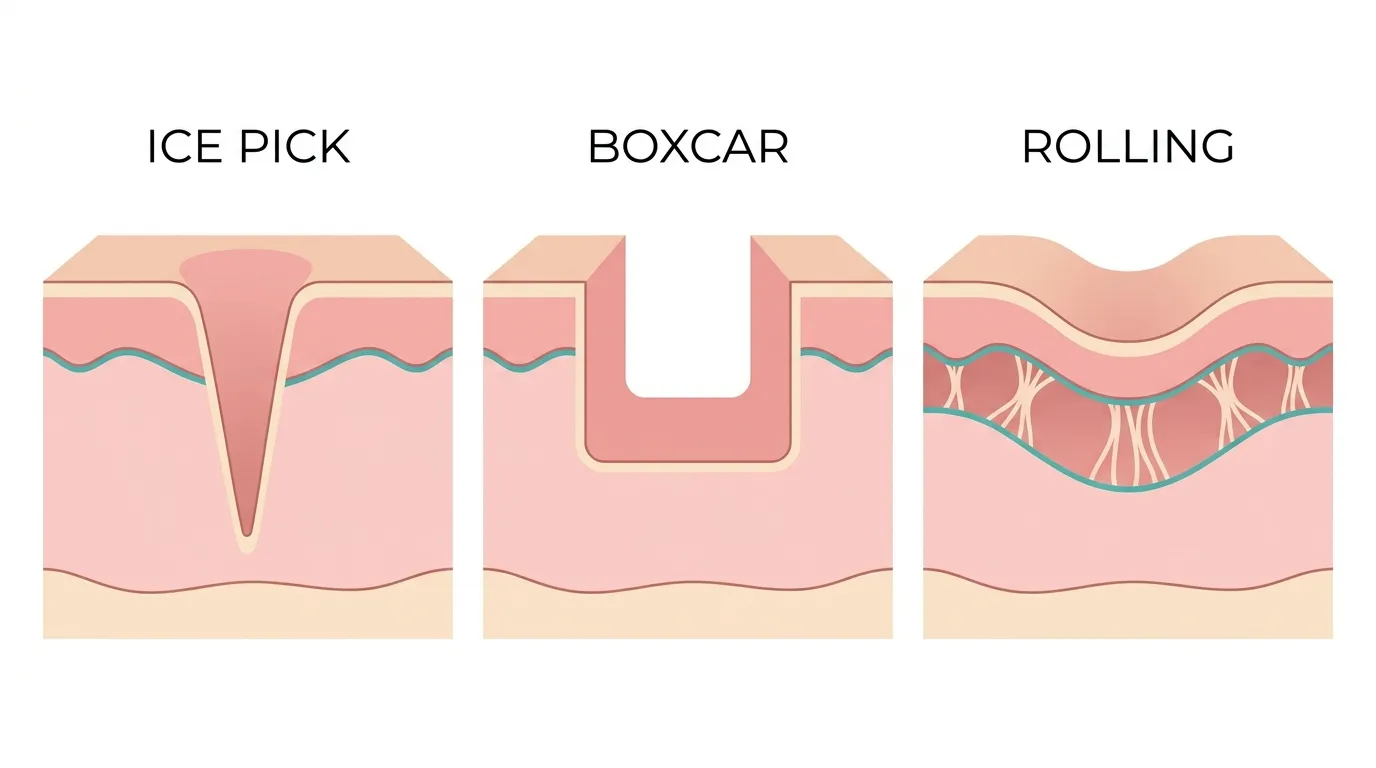
| ประเภทของแผลเป็น | หน้าตาเป็นอย่างไร | การรักษาที่เหมาะสมที่สุด |
|---|---|---|
| หลุมสิวระดับลึก | หลุมลึก แคบ รูปตัววี | TCA CROSS |
| หลุมสิวขอบชัด | หลุมกว้างที่มีขอบคมชัด | การใช้เข็มขนาดเล็กเจาะผิวหนังด้วยคลื่นวิทยุ (RF microneedling), การผ่าตัดใต้ผิวหนัง (subcision) |
| หลุมสิวแบบแอ่งกระทะ | หลุมกว้าง ตื้น และมีลักษณะคล้ายคลื่น | การผ่าตัดใต้ผิวหนัง (Subcision), การใช้เข็มขนาดเล็กเจาะผิวหนังด้วยคลื่นวิทยุ (RF microneedling), ฟิลเลอร์ใต้ผิวหนัง |
| รอยดำหลังการอักเสบ / จุดด่างดำ | จุดสีน้ำตาลเรียบ (ไม่มีการเปลี่ยนแปลงของพื้นผิว) | ผลิตภัณฑ์ทาภายนอก, การลอกผิวด้วยสารเคมี, เลเซอร์พิโค |
| ผื่นแดงหลังการอักเสบ / รอยแดง | รอยสีชมพูแดงเรียบ (ไม่มีการเปลี่ยนแปลงของพื้นผิว) | เลเซอร์รักษาเส้นเลือดฝอย, ให้เวลาผิวฟื้นตัว, การทาครีมกันแดดป้องกันแสงแดด |
รอยแผลเป็นจากสิว กับ รอยดำ: ทำไมความแตกต่างจึงสำคัญ
นี่คือจุดที่คนส่วนใหญ่สับสน รอยดำหลังการอักเสบ (PIH) และ ผื่นแดงหลังการอักเสบ (PIE) เป็นการเปลี่ยนแปลงของสี ไม่ใช่การเปลี่ยนแปลงของพื้นผิว ลองใช้นิ้วลูบไปบนบริเวณนั้น หากผิวหนังรู้สึกเนียนและเรียบ แสดงว่าเป็นรอย ไม่ใช่แผลเป็น รอยนั้นรักษาได้ง่ายกว่ามาก และมักจะจางหายไปเองด้วยการปกป้องผิวจากแสงแดดที่ดี
รอยแผลเป็นที่แท้จริงคือการเปลี่ยนแปลงทางกายภาพของโครงสร้างผิวหนัง: คอลลาเจนอาจสูญเสียไป (ทำให้เกิดรอยบุ๋ม) หรือผลิตมากเกินไป (ทำให้เกิดรอยแผลเป็นนูน) รอยแผลเป็นเหล่านี้ต้องการการรักษาด้วยวิธีทางการแพทย์ ไม่ใช่แค่การใช้ผลิตภัณฑ์ หากคุณกังวลเรื่องรอยด่างดำที่แก้ไขยากมากกว่าเรื่องผิวสัมผัส เรามีบริการอื่นๆ ที่เหมาะสม ตัวเลือกการรักษาเม็ดสี อาจเป็นจุดเริ่มต้นที่ดีกว่า
วิธีรักษารอยแผลเป็นจากสิว: ทางเลือกการรักษาที่ได้ผล
นี่คือขั้นตอนที่เราใช้ในการแก้ไขรอยแผลเป็นจากสิวที่ได้รับการพิสูจน์แล้ว ผลลัพธ์ที่ดีที่สุดมาจากการใช้ขั้นตอนเหล่านี้ ร่วมกัน โดยผลลัพธ์ที่ดีที่สุดมักมาจากการผสมผสาน 2 ถึง 3 วิธีเข้าด้วยกันในแผนการรักษาเดียว เนื่องจากใบหน้าของคนส่วนใหญ่มักมีประเภทของรอยแผลเป็นปะปนกันหลายแบบ
ประเด็นสำคัญที่ควรกล่าวให้ชัดเจนคือ โปรโตคอลของเราเน้นการรักษาที่ช่วยสร้างคอลลาเจนขึ้นใหม่ ใต้ผิวหนัง แทนที่จะขจัดเซลล์ผิวชั้นบนออกไป สำหรับผิวชาวเอเชีย การผลัดเซลล์ผิวอย่างรุนแรงที่มีความเสี่ยงสูงมากที่จะกระตุ้นให้เกิดรอยดำใหม่ตามมา — ซึ่งการแลกปัญหาผิวไม่เรียบเนียนไปเป็นปัญหารอยดำ ถือเป็นการแลกที่ไม่คุ้มค่า และนั่นคือเหตุผลที่เราคัดเลือกเฉพาะวิธีรักษาด้านล่างนี้มาใช้
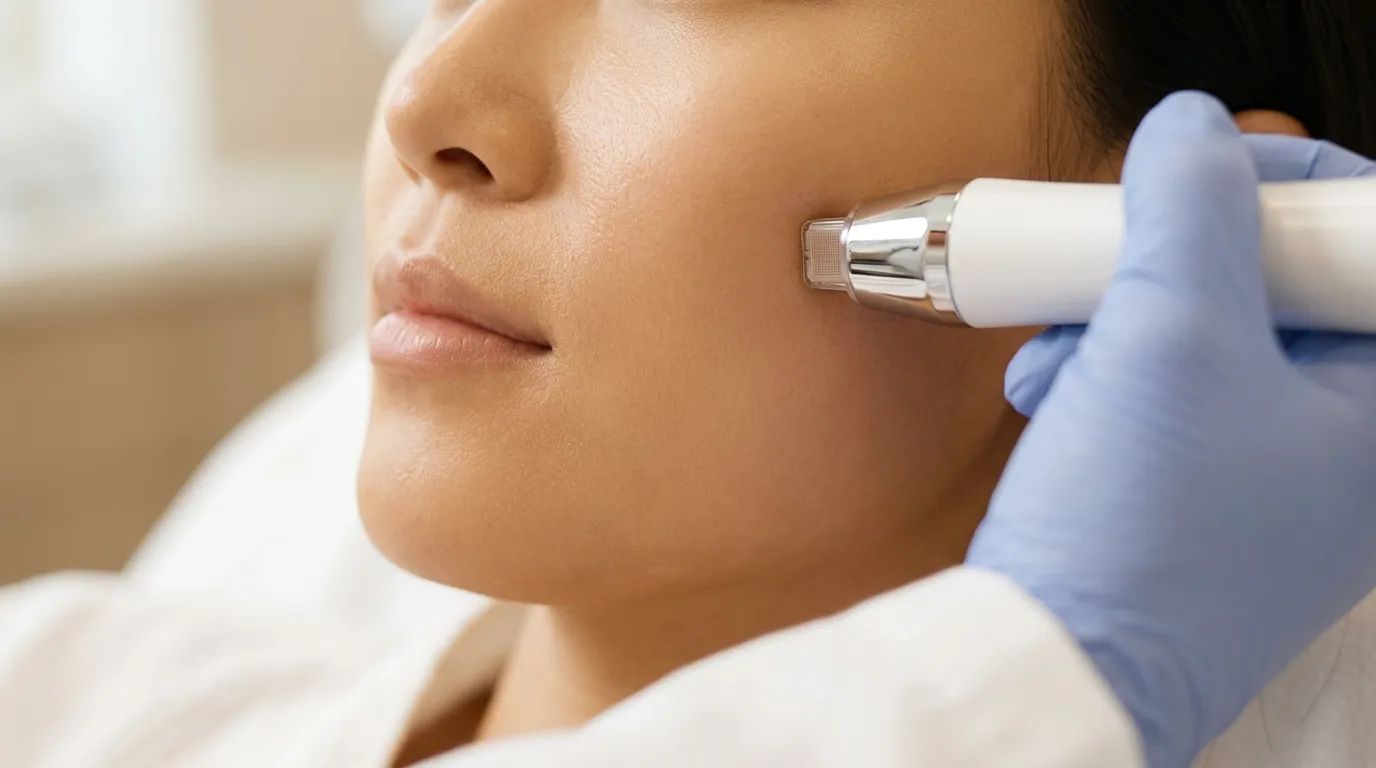
1. การใช้เข็มขนาดเล็กเจาะผิวหนังด้วยคลื่นวิทยุ (RF microneedling): เทคนิคยอดนิยมสำหรับผิวชาวเอเชีย
การใช้เข็มขนาดเล็กเจาะผิวหนังด้วยคลื่นวิทยุ (RF) เป็นหัวใจสำคัญของการแก้ไขรอยแผลเป็นในปัจจุบัน โดยเฉพาะอย่างยิ่งสำหรับผู้ที่มีผิวสีเข้ม เข็มขนาดเล็กที่หุ้มฉนวนจะส่งความร้อนโดยตรงไปยังชั้นหนังแท้ กระตุ้นการสร้างคอลลาเจนและอีลาสตินขึ้นใหม่ในระดับความลึกที่ตรงกับรอยแผลเป็น โดยไม่ทำลายผิวชั้นนอกมากนัก นี่คือเหตุผลที่ทำให้ปลอดภัยกว่าเลเซอร์ที่กำจัดผิวชั้นนอกในผิวชาวเอเชีย ซึ่งความร้อนอาจกระตุ้นการสร้างเม็ดสีใหม่ได้ วิธีนี้ได้ผลดีกับรอยแผลเป็นแบบขอบชัดและรอยแผลเป็นแบบแอ่งกระทะ รวมถึงช่วยปรับปรุงผิวโดยรวม และแผนการรักษารอยแผลเป็นส่วนใหญ่ของเราก็ใช้วิธีนี้เป็นหลัก เรียนรู้เพิ่มเติมเกี่ยวกับเรื่องนี้ แพลตฟอร์ม Exion RF microneedling ที่เราเลือกใช้
2. TCA CROSS: สำหรับแผลเป็นลึกเหมือนถูกเหล็กแหลมแทง
TCA CROSS (Chemical Reconstruction of Skin Scars) คือการรักษาแผลเป็นแบบหลุมลึกทีละจุด โดยใช้ trichloroacetic acid ความเข้มข้นสูงฉีดเข้าไปที่ฐานของหลุมแคบๆ แต่ละหลุม กระตุ้นกระบวนการสมานแผลแบบควบคุม และเติมเต็มหลุมจากด้านล่างขึ้นไป วิธีนี้สามารถเข้าถึงแผลเป็นที่อุปกรณ์ใช้เข็มเจาะไม่สามารถเข้าถึงได้ เพราะหลุมลึกและแคบกว่าที่เข็มชนิดใดๆ จะรักษาได้ การรักษาจะทำทีละจุด และมักใช้ร่วมกับการรักษาอื่นๆ ตลอดระยะเวลาการรักษา
3. การผ่าตัดใต้ผิวหนัง (Subcision) (และการฉีดฟิลเลอร์): สำหรับรอยแผลเป็นนูนที่ยึดติดแน่น
รอยแผลเป็นแบบแอ่งกระทะเกิดจากพังผืดใต้ผิวหนังที่ดึงรั้งผิวชั้นบนให้ยุบตัวลงไปติดกับเนื้อเยื่อส่วนลึก การรักษาผิวเผินไม่สามารถยกรอยแผลเป็นที่ยึดติดอยู่จากด้านล่างได้ การผ่าตัดใต้ผิวหนัง (Subcision) จะใช้เข็มขนาดเล็กหรือเข็มทู่ (cannula) เข้าไปตัดเลาะพังผืดเหล่านี้เพื่อให้ผิวหนังลอยตัวยกกระชับขึ้นมาได้อีกครั้ง หลังจากนั้นช่องว่างที่ถูกเลาะออกสามารถฟื้นฟูเสริมต่อด้วยหัตถการกระตุ้นคอลลาเจน หรือในบางกรณีอาจใช้ฟิลเลอร์เพื่อช่วยดันผิวให้ตื้นขึ้นทันที ดูรายละเอียดเพิ่มเติมได้ที่... ตัวเลือกการฉีดฟิลเลอร์และสารฉีดเพื่อปรับสภาพผิว ว่านำมาใช้ในการแก้ไขรอยแผลเป็นได้อย่างไร
4. Punch Excision and Punch Elevation: สำหรับแผลเป็นลึกบางประเภท
รอยแผลเป็นลึกขนาดเล็ก เช่น รอยแผลเป็นขนาดลึกหรือรอยแผลเป็นขอบชัด จะตอบสนองได้ดีที่สุดต่อการแก้ไขด้วยการผ่าตัดเล็กน้อย การผ่าตัดแบบ Punch excision จะเอารอยแผลเป็นออกทั้งหมดด้วยใบมีดกลมขนาดเล็ก และเย็บปิดแผลเล็กๆ ด้วยไหมเย็บละเอียด ทำให้เหลือรอยเส้นเล็กๆ ที่จะจางลงในอีกไม่กี่เดือนข้างหน้า ส่วนการผ่าตัดแบบ Punch elevation จะตัดรอยแผลเป็นออกที่ฐานและยกให้เสมอกับผิวหนังโดยรอบ โดยไม่มีการตัดส่วนใดออกไป ดังนั้นสีผิวและเนื้อสัมผัสของผิวคุณจึงยังคงอยู่ การผ่าตัดทั้งสองวิธีใช้เวลาไม่นาน ทำภายใต้การฉีดยาชาเฉพาะที่ เหมาะสำหรับรอยแผลเป็นลึกไม่กี่รอยที่มีผิวหนังปกติอยู่ระหว่างรอยแผลเป็น และมักใช้กับรอยแผลเป็นที่ลึกเกินกว่าจะใช้ TCA CROSS หรือ microneedling ได้ มักจะใช้ RF microneedling ในภายหลังเพื่อปรับขอบที่ได้รับการรักษาให้กลมกลืนกับผิวหนังโดยรอบ
5. การลอกผิวด้วยสารเคมีทางการแพทย์: สำหรับปรับสภาพผิวและลดรอยแผลเป็น
การผลัดเซลล์ผิวด้วยสารเคมีทางการแพทย์ใช้ AHA, BHA หรือ TCA ในความเข้มข้นที่ควบคุมได้ เพื่อเร่งการผลัดเซลล์ผิว ขจัดสิ่งอุดตันในรูขุมขน และปรับสภาพผิวที่ไม่เรียบเนียนให้เรียบเนียนขึ้น แม้ว่าจะไม่สามารถฟื้นฟูรอยแผลเป็นลึกได้ด้วยตัวเอง แต่ก็มีบทบาทสำคัญในแผนการรักษาแบบผสมผสาน เพราะช่วยควบคุมสิวที่กำลังขึ้น ลดรอยดำจากสิว และปรับสภาพผิวให้สะท้อนแสงได้สม่ำเสมอ ซึ่งเป็นสาเหตุสำคัญที่ทำให้ผิวที่มีรอยแผลเป็นดูเด่นชัด ความเข้มข้นและระยะเวลาในการสัมผัสสามารถปรับได้ ดังนั้นจึงสามารถเริ่มต้นด้วยสารผลัดเซลล์ผิวที่อ่อนโยนสำหรับผิวชาวเอเชีย และค่อยๆ เพิ่มความเข้มข้นขึ้นทีละน้อย แทนที่จะใช้ความเข้มข้นสูงในครั้งเดียว
6. เลเซอร์ Pico: สำหรับรอยดำและเม็ดสี
สำหรับรอยดำหลังการอักเสบและรอยคล้ำจากสิว เลเซอร์ Pico จะปล่อยพัลส์สั้นมาก ๆ เพื่อทำลายเม็ดสีส่วนเกินให้เป็นอนุภาคเล็ก ๆ ที่ร่างกายจะกำจัดออกไปเอง เนื่องจากพัลส์มีระยะเวลาเพียงไม่กี่พิโควินาที ความร้อนจึงกระจายไปยังผิวหนังบริเวณใกล้เคียงน้อยมาก ซึ่งเป็นสิ่งสำคัญสำหรับผิวชาวเอเชีย เพราะความร้อนเองอาจกระตุ้นให้เกิดเม็ดสีใหม่ได้ เลเซอร์ Pico ช่วยแก้ไขสี ไม่ใช่พื้นผิว ดังนั้น จึงเหมาะกับรอยเรียบ ๆ มากกว่ารอยหลุม หากรอยของคุณเป็นสีชมพูหรือสีแดงมากกว่าสีน้ำตาล นั่นคือ รอยแดง (PIE) และ... เลเซอร์หลอดเลือด ที่มุ่งเป้าไปที่เส้นเลือดฝอยขยายตัวจะตอบโจทย์ได้ตรงจุดมากกว่า
7. ผลิตภัณฑ์บำรุงผิวเพื่อคุณภาพผิวโดยรวม
เมื่อแก้ไขรอยแผลเป็นแล้ว การฉีดสารเพิ่มความชุ่มชื้นและปรับสภาพผิวจะช่วยเพิ่มความเรียบเนียน ความยืดหยุ่น และความเปล่งปลั่ง ทำให้บริเวณที่ได้รับการรักษากลมกลืนกับผิวโดยรอบ ตัวเลือกต่างๆ เช่น การฉีดสารบำรุงผิวเพื่อเพิ่มความชุ่มชื้นและคุณภาพผิว, เมโสเทอราพีผิว, และ Profhilo bio-remodelling เป็นขั้นตอนการตกแต่งและบำรุงรักษาทั่วไป
การรักษาแบบใดที่เหมาะสมกับรอยแผลเป็นของคุณ?
ใช้คู่มือฉบับย่อนี้เป็นจุดเริ่มต้น การปรึกษาแพทย์ยังคงมีความสำคัญ เนื่องจากความลึกของแผลเป็น สีผิว และชนิดของแผลเป็น ล้วนส่งผลต่อแผนการรักษา
| ข้อกังวลหลักของคุณ | แนวทางการรักษาเบื้องต้น | มักใช้ร่วมกับ |
|---|---|---|
| หลุมสิวระดับลึก (เหมือนที่เจาะน้ำแข็ง) | TCA CROSS | การใช้เข็มขนาดเล็กเจาะผิวหนังด้วยคลื่นวิทยุ (RF microneedling) |
| หลุมสิวขอบชัด (boxcar) | การใช้เข็มขนาดเล็กเจาะผิวหนังด้วยคลื่นวิทยุ (RF microneedling) | การผ่าตัดใต้ผิวหนัง (Subcision), การลอกผิวด้วยสารเคมี |
| หลุมสิวแบบแอ่งกระทะ (rolling) | การผ่าตัดใต้ผิวหนัง (Subcision) | การใช้เข็มขนาดเล็กเจาะผิวหนังด้วยคลื่นวิทยุ (RF microneedling), ฟิลเลอร์ |
| จุดสีน้ำตาลเรียบ (PIH) | ผลิตภัณฑ์ทาภายนอก + ครีมกันแดด | เลเซอร์ Pico, การลอกผิว |
| รอยสีชมพูแดงเรียบ (PIE) | การปกป้องผิวจากแสงแดด + เวลา | เลเซอร์รักษาเส้นเลือดฝอย |
| รอยแผลเป็นแบบผสม (พบในคนส่วนใหญ่) | โปรโตคอลแบบผสมผสาน | ผลิตภัณฑ์บำรุงผิวเพื่อการบำรุงรักษา |
การรักษาที่บ้านเทียบกับการรักษาโดยผู้เชี่ยวชาญ: อะไรได้ผลจริงบ้าง
การดูแลผิวที่บ้านมีบทบาทสำคัญแต่ก็มีข้อจำกัด ช่วยลดรอยแผลเป็นและปรับปรุงคุณภาพผิวได้ดี และช่วยบำรุงผิวทั้งก่อนและหลังการทำหัตถการ แต่ไม่สามารถสร้างคอลลาเจนที่สูญเสียไปในแผลเป็นลึกขึ้นมาใหม่ได้ นี่คือคำอธิบายอย่างตรงไปตรงมา:
- สิ่งที่ควรทำเองที่บ้าน: ครีมกันแดดที่มีค่า SPF 30–50 สำหรับใช้ทุกวัน ร่วมกับ retinoid ที่ต้องสั่งโดยแพทย์หรือเวชภัณฑ์ วิตามินซี azelaic acid และกรดผลัดเซลล์ผิวอย่างอ่อนโยนเพื่อลดรอยและปรับสภาพผิว
- ตั้งความคาดหวังให้เหมาะสม: ครีมและเจลซิลิโคนที่หาซื้อได้ทั่วไปช่วยลดรอยแผลเป็นนูนได้ดีกว่ารอยแผลเป็นบุ๋ม
- สิ่งที่ควรหลีกเลี่ยง: การใช้ลูกกลิ้งเข็มที่บ้าน (dermarollers ) และการลอกผิวแบบทำเองที่รุนแรงกับผิวที่เป็นสิวง่าย มีความเสี่ยงต่อการติดเชื้อ การระคายเคือง และการเกิดเม็ดสีใหม่
- หัตถการที่ควรให้แพทย์เฉพาะทางผิวหนังเป็นผู้ดูแล: TCA CROSS, การผ่าตัดใต้ผิวหนัง (subcision), การลอกผิวด้วยเลเซอร์ระดับทางการแพทย์, เลเซอร์ Pico และ การใช้เข็มขนาดเล็กเจาะผิวหนังด้วยคลื่นวิทยุ (RF microneedling)
กลยุทธ์สองขั้นตอน: ควบคุมก่อน แล้วจึงซ่อมแซม
นี่คือหลักการที่คนส่วนใหญ่มองข้าม: คุณไม่สามารถรักษารอยแผลเป็นได้อย่างมีประสิทธิภาพในขณะที่สิวยังคงกำเริบอยู่ การรักษาผิวที่อักเสบหรือมีผื่นขึ้นนั้นไม่ได้ผลและอาจทำให้เกิดความเสียหายใหม่ได้ นั่นคือเหตุผลที่เราใช้โปรโตคอลสองขั้นตอน
- ระยะที่ 1 กลุ่มควบคุม (เดือนที่ 1-3): รักษาสิวอักเสบให้หายขาดและสงบลงด้วยการทำทรีทเมนต์ผิวหน้าทางการแพทย์ การลอกผิวด้วยสารเคมี การบำบัดด้วยแสง LED และการใช้ยาทาหรือรับประทานตามใบสั่งแพทย์ เป้าหมายคือป้องกันการเกิดสิวใหม่
- ขั้นตอนที่ 2 การซ่อมแซม (ตั้งแต่เดือนที่ 3 เป็นต้นไป): เมื่อควบคุมสิวได้แล้ว ให้ทำการรักษารอยแผลเป็นและรอยดำที่มีอยู่ด้วยวิธีการที่เหมาะสมกับรอยแผลเป็นแต่ละประเภท จากนั้นคงผลลัพธ์ไว้ด้วยการบำรุงผิวให้มีสุขภาพดี
วิธีป้องกันรอยแผลเป็นจากสิวตั้งแต่แรก
การป้องกันย่อมง่ายกว่าการแก้ไขเสมอ และรอยแผลเป็นส่วนใหญ่สามารถป้องกันได้ด้วยการรักษาสิวอย่างถูกวิธีตั้งแต่เนิ่นๆ สร้างนิสัยเหล่านี้ และดูคำแนะนำฉบับเต็มของเราได้ที่นี่ วิธีป้องกันรอยแผลเป็นจากสิว สำหรับรายละเอียดเพิ่มเติม
- รักษาปัญหาสิวตั้งแต่เนิ่นๆ และอย่างถูกวิธี ยิ่งการอักเสบเรื้อรังนานเท่าไร ความเสี่ยงต่อการเกิดแผลเป็นก็ยิ่งสูงขึ้นเท่านั้น ควรไปพบแพทย์เฉพาะทางผิวหนังหากเป็นสิวระดับปานกลางหรือเรื้อรัง แทนที่จะรอให้หายเอง
- ห้ามแกะหรือบีบเด็ดขาด การแกะเกาจะยิ่งทำให้การอักเสบลึกเข้าไป และเป็นสาเหตุสำคัญของทั้งรอยแผลเป็นหลุมและรอยดำ
- ควรทาครีมกันแดดทุกวัน รังสียูวีทำให้รอยแผลเป็นจากสิวเข้มขึ้นและคงอยู่นานขึ้น ครีมกันแดดที่มีค่า SPF ครอบคลุมทุกช่วงคลื่นแสงจึงเป็นสิ่งจำเป็นอย่างยิ่ง
- จงมีความสม่ำเสมอ ปฏิบัติตามขั้นตอนการรักษาที่แพทย์กำหนดอย่างเคร่งครัด การหยุดรักษาจะทำให้สิวและรอยแผลเป็นกลับมาอีกครั้ง
ผลลัพธ์ที่คุณคาดหวังได้จริงคือระดับไหน?
การแก้ไขรอยแผลเป็นเป็นกระบวนการ ไม่ใช่การนัดหมายเพียงครั้งเดียว คอลลาเจนจะสร้างขึ้นใหม่เรื่อยๆ เป็นเวลาหลายเดือนหลังจากการรักษาแต่ละครั้ง ดังนั้นการเปลี่ยนแปลงจึงค่อยเป็นค่อยไปและดีขึ้นเรื่อยๆ ตามเวลา ตารางนี้เป็นเพียงแนวทางผลลัพธ์ตามความเป็นจริง แพทย์เฉพาะทางผิวหนังของคุณจะปรับให้เหมาะสมกับความรุนแรงของรอยแผลเป็นและสภาพผิวของคุณ
| ช่วงเวลา | ผลลัพธ์ที่คาดว่าจะได้รับ |
|---|---|
| หลังการรักษา 1 ครั้ง | ช่วยให้ผิวเรียบเนียนขึ้นเล็กน้อย ผิวอาจดูอมชมพูเล็กน้อยหรือรู้สึกหยาบกร้านขณะที่กำลังฟื้นตัว |
| 3–6 เดือน (3–4 ครั้ง) | สัมผัสได้ถึงการปรับปรุงสภาพผิวอย่างเห็นได้ชัด เนื่องจากการสร้างคอลลาเจนใหม่ |
| 6–12 เดือน | ผลลัพธ์ที่ยอดเยี่ยม: รอยแผลเป็นบุ๋มลึกดูตื้นขึ้นอย่างเห็นได้ชัด สีผิวสม่ำเสมอยิ่งขึ้น |
| การดูแลต่อเนื่อง | การบำรุงรักษาและการบำบัดเพื่อเสริมคุณภาพผิวจะช่วยคงผลลัพธ์และเสริมให้ดียิ่งขึ้น |
คำถามที่พบบ่อย
รอยแผลเป็นจากสิวสามารถหายไปได้เองตามธรรมชาติหรือไม่?
รอยแผลเป็นสีดำหรือแดงแบบเรียบ (PIH และ PIE) มักจะจางลงเองภายใน 3-24 เดือน โดยเฉพาะอย่างยิ่งหากมีการปกป้องผิวจากแสงแดดอย่างดี แต่รอยแผลเป็นแบบบุ๋มลึก (รอยแผลเป็นแบบหลุมลึก รอยแผลเป็นแบบขอบชัด รอยแผลเป็นแบบแอ่งกระทะ) จะไม่จางลง เพราะเป็นความเปลี่ยนแปลงถาวรของโครงสร้างผิวหนังและจำเป็นต้องได้รับการรักษาจากผู้เชี่ยวชาญจึงจะดีขึ้น
ฉันต้องเข้ารับการรักษาทั้งหมดกี่ครั้ง?
โดยทั่วไปคนไข้ส่วนใหญ่ต้องการการรักษา 3-6 ครั้ง โดยเว้นระยะห่างประมาณ 4-6 สัปดาห์ ขึ้นอยู่กับชนิดและความรุนแรงของรอยแผลเป็น รอยแผลเป็นที่ลึกและซับซ้อนมักต้องการการรักษาหลายครั้งและใช้เทคนิคหลายอย่างร่วมกัน
ผลิตภัณฑ์รักษารอยแผลเป็นจากสิวปลอดภัยสำหรับผิวสีเข้มหรือผิวชาวเอเชียหรือไม่?
ใช่ค่ะ เมื่อแพทย์เฉพาะทางผิวหนังผู้เชี่ยวชาญเลือกเทคนิคและการตั้งค่าที่เหมาะสม ผิวของชาวเอเชียมีความเสี่ยงต่อการเกิดเม็ดสีหลังการรักษามากกว่า ซึ่งเป็นเหตุผลที่เราวางแผนการรักษาโดยเน้นวิธีการที่ช่วยถนอมผิวชั้นบน เช่น การใช้เข็มขนาดเล็กเจาะผิวหนังด้วยคลื่นวิทยุ (RF microneedling), การผ่าตัดใต้ผิวหนัง (Subcision) และ TCA CROSS แทนที่จะใช้วิธีการลอกผิวแบบรุนแรง
การรักษารอยแผลเป็นจากสิวเจ็บหรือไม่?
โดยทั่วไปแล้ว การรักษาจะใช้ยาชาเฉพาะที่ ดังนั้นความรู้สึกไม่สบายจึงมักไม่รุนแรงและสามารถทนได้ ระยะเวลาพักฟื้นจะแตกต่างกันไป ตั้งแต่มีรอยแดงประมาณหนึ่งวัน ไปจนถึงประมาณหนึ่งสัปดาห์ ขึ้นอยู่กับการรักษา
การรักษารอยแผลเป็นจากสิวที่ดีที่สุดคืออะไร?
ไม่มีวิธีการรักษาใดที่ดีที่สุดเพียงวิธีเดียว เพราะขึ้นอยู่กับประเภทของรอยแผลเป็น สำหรับคนส่วนใหญ่ที่มีรอยแผลเป็นแบบผสมบนผิวชาวเอเชีย แผนการรักษาแบบผสมผสานที่ใช้ การใช้เข็มขนาดเล็กเจาะผิวหนังด้วยคลื่นวิทยุ (RF microneedling), ร่วมกับ TCA CROSS, การผ่าตัดใต้ผิวหนัง (Subcision), การลอกผิวด้วยสารเคมี และการรักษาปัญหาเม็ดสีผิวตามความจำเป็น จะให้ผลลัพธ์ที่ดีที่สุด
พร้อมรักษาแผลเป็นจากสิวแล้วหรือยัง?
รอยแผลเป็นจากสิวสามารถรักษาได้ผลดีมาก หากแผนการรักษาเหมาะสมกับรอยแผลเป็นและจัดทำโดยแพทย์เฉพาะทางผิวหนังผู้เชี่ยวชาญที่เข้าใจสภาพผิวของคุณ ขั้นตอนแรกคือการหาประเภทของรอยแผลเป็นที่คุณมีอย่างแน่ชัด ดูรายละเอียดเพิ่มเติมได้ในแผนการรักษาของเรา โปรแกรมรักษาสิวและรอยแผลเป็น, หรือ จองคิวตรวจสภาพผิวแบบเฉพาะบุคคลกับคุณหมอแป้งได้เลย เพื่อวางแผนเส้นทางสู่ผิวที่เรียบเนียนและกระจ่างใสยิ่งขึ้น
เอกสารอ้างอิงและแหล่งข้อมูลเพิ่มเติม
- American Academy of Dermatology Association. Acne scars: Overview
- DermNet. Acne Scarring
- Cleveland Clinic. Acne Scars: Causes, Types & Treatment
- Fabbrocini G, et al. Acne Scars: Pathogenesis, Classification and Treatment (Dermatology Research and Practice)
- Connolly D, et al. Acne Scarring—Pathogenesis, Evaluation, and Treatment Options (JCAD)
บทความนี้มีวัตถุประสงค์เพื่อการศึกษาเท่านั้น และไม่สามารถใช้แทนการปรึกษาแพทย์ส่วนตัวได้ ผลลัพธ์ที่ได้อาจแตกต่างกันไปในแต่ละบุคคล